Site description
At the LTER site of Portofino Promontory (eLTER-IT15-001-M), long-term ecological research has been conducted since the 1980s, with a particular focus on the planktonic compartment of the coastal food web in the Ligurian Sea.
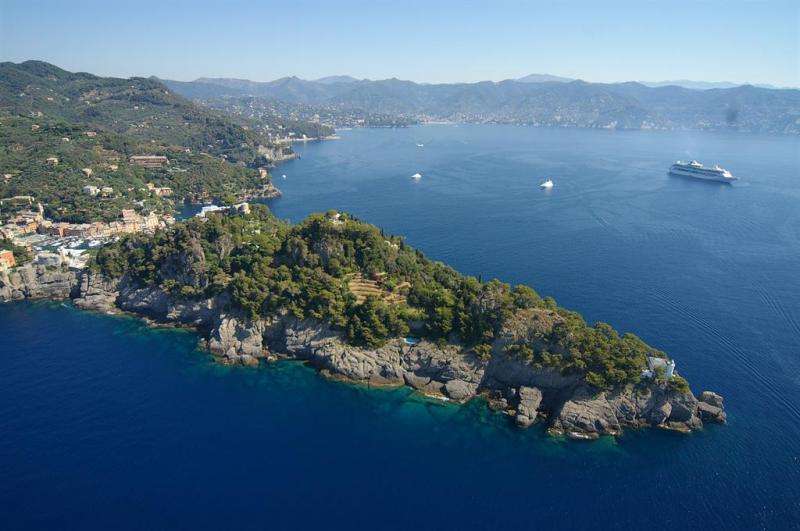
The Marine area of Portofino Promontory stretches into the Ligurian Sea for more than 3 kilometers, extending along the coast for about 13 kilometers. The submerged cliffs of the Portofino Promontory house a particularly rich and diversified fauna and flora. The rock forming the southern slope of the promontory, rich in ravines and fissures, has favoured the settlement of a typical Mediterranean environment, the coralligenous community, developing in a manner which can be rarely observed in other areas. From 30 to more than 50 meters of depth, thanks to the continuous building action of the coral algae and of calcareous skeleton animals, a very complex ecosystem, dominated by big gorgonians, red corals, sponges, stony corals, and bryozoans, has been formed.
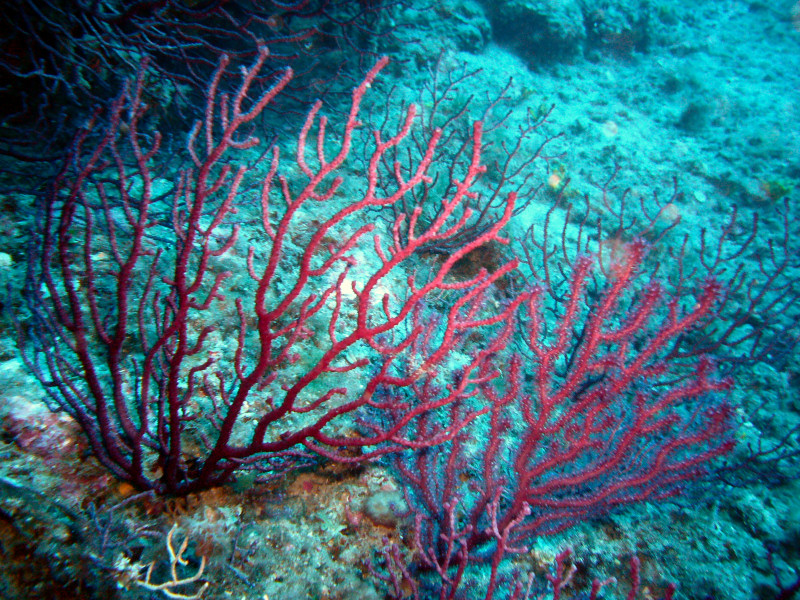
On the sandy seabed, along the western and eastern slopes of the promontory, there are Posidonia beds, housing a very rich fauna. Station sampling Portofino: Ca’ dell’Oro 9.16276° 44.31389° N, Punta faro 9.21971° E 44.29530° N.
Omics activities at the site
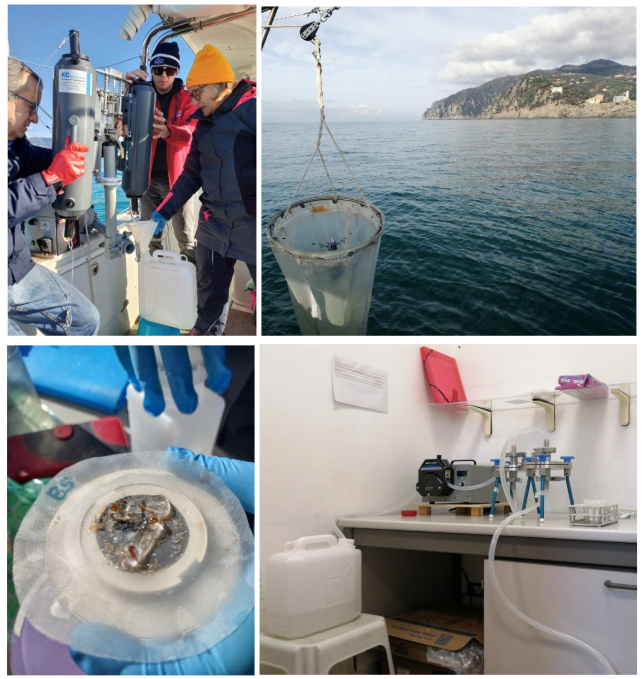
Since January 2024, monthly sampling and multi-omics analyses have been carried out at the Punta Faro sampling station (44°17.750’N, 9°13.050’E; 80 m depth), following Standardized Operating Procedures (SOPs) implemented within the Italian Omics Observatory Network for Marine Biodiversity (NBFC — Spoke 2 — Activity 5).
Surface samples are collected year-round; during the period of water column stratification (May–October), additional bottom water samples (80 m depth) are also taken.
In 2024, a total of 210 samples were collected for DNA extraction, yielding 510 samples for metabarcoding, 78 for shotgun sequencing, and 210 for biobanking. Sampling has continued in 2025 with the aim of establishing a systematic, integrated observation effort in coordination with broader LTER activities. Ongoing analyses will compare omics data with classical and semi-automated (e.g., ZooScan, IFCB FlowCytobot) taxonomic assessments as soon as data become available.